
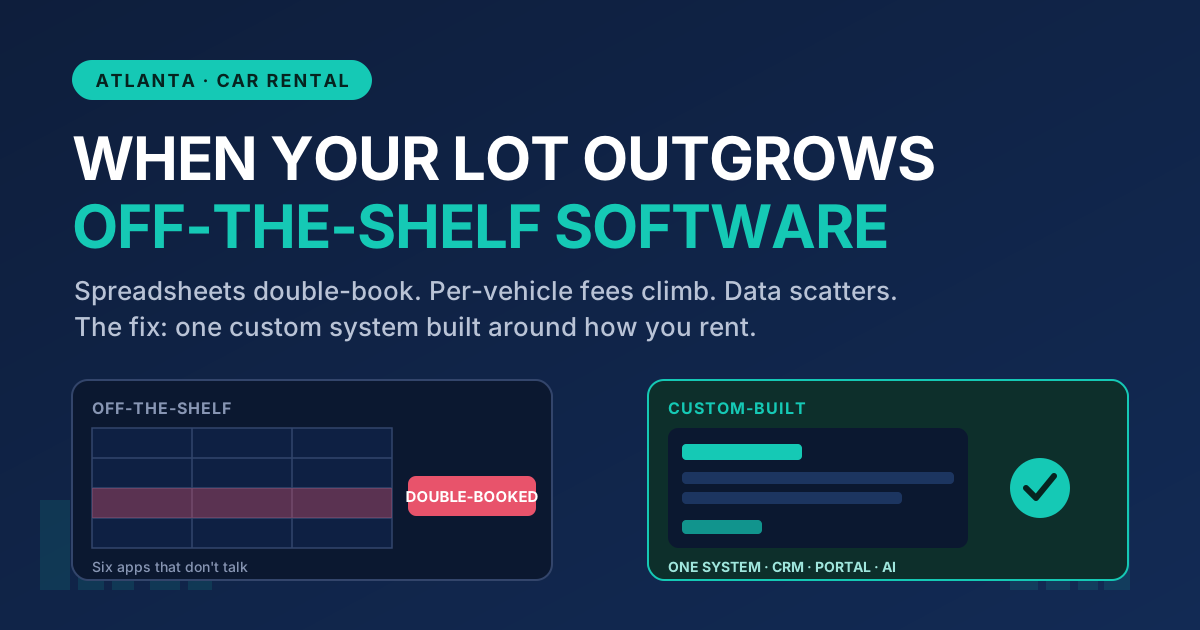
An Atlanta rental operator opens Monday with a double-booked Tahoe, a customer standing at the counter with a confirmation email for a car that left the lot an hour ago, and a spreadsheet that says everything is fine. The booking software isn’t lying — it just was never built for how a car rental lot actually runs. That’s the wall independent Atlanta operators keep hitting: the off-the-shelf tool that got you started can’t hold your fleet, your renters, and your follow-up in one place. The fix most growing Atlanta lots land on in 2026 is custom software built around their operation — a reservation CRM, a branded booking portal, and a fleet dashboard that finally talk to each other — and because it’s now built with AI-assisted development, it ships in weeks at roughly half the cost and 10× the speed of a traditional dev shop, with you owning 100% of the code.
This is a plain-English pain-points guide for Atlanta car rental owners (and the agencies serving them) on the exact places generic booking software leaks money, what the scattered-systems tax really costs, and what a custom reservation system built for your lot looks like.
Key Takeaways
- Hartsfield-Jackson Atlanta International (ATL) handled 108.1 million passengers in 2024 — one of the highest annual totals in its history, and it has ranked as the world’s busiest airport for 26 of the last 27 years (Atlanta News First / ATL; CNBC). That is a firehose of ground-transportation demand your software has to capture cleanly.
- Georgia drew a record 174.2 million visitors in 2024, spending $45.2 billion and supporting 470,570 jobs (Explore Georgia). More demand means more bookings, more vehicles, and more ways for a spreadsheet to break.
- The average company ran 106 different SaaS apps in 2024, and roughly 53% of SaaS licenses sit idle (Statista / BetterCloud; BetterCloud) — the “scattered data” problem is now the default, not the exception.
- Employees toggle between apps around 1,200 times a day, spending about 4 hours a week just reorienting after switching tools (Harvard Business Review). For a two-person lot, that’s a day of work a month lost to app-switching.
- More than 80% of small businesses using AI report productivity gains, and 16% report gains above 20% (JPMorganChase Institute) — which is why custom software with an AI layer, not another rigid SaaS seat, is where operators are moving.
Table of contents
- Atlanta’s rental demand is booming — generic software is the bottleneck
- 6 signs your Atlanta lot has outgrown off-the-shelf booking software
- The hidden tax of scattered systems
- Build vs. buy: when custom software actually pays off
- What custom software for an Atlanta rental lot looks like
- “Isn’t custom software slow and expensive?” — not anymore
- How to know you’re ready to replace your booking software
- The bottom line for Atlanta operators
- Frequently asked questions
Atlanta’s rental demand is booming — generic software is the bottleneck
Metro Atlanta is one of the strongest independent car-rental markets in the Southeast, and the demand curve keeps climbing. ATL moved 108.1 million passengers in 2024, one of its highest annual counts ever, and it has held the title of the world’s busiest airport for 26 of the last 27 years (Atlanta News First; CNBC). Zoom out to the state and Georgia set a record with 174.2 million visitors in 2024, $45.2 billion in visitor spending, and 470,570 tourism-supported jobs (Explore Georgia). Nationally, the U.S. vehicle-rental market is projected around $51 billion in 2026, growing to roughly $67 billion by 2031 (Mordor Intelligence).
Here’s the uncomfortable part: none of that demand helps you if your software drops the booking. A record travel year means more inquiries, more reservations, more vehicles to track, and more turnarounds per weekend than a spreadsheet or a one-size-fits-all rental app can hold without cracking. Demand isn’t the constraint in Atlanta. The system you use to capture and manage it is — and the tool that felt fine at five cars starts leaking money at twenty-five. This is the same capacity ceiling we cover in the fleet-utilization playbook: the lot is full on paper, but the software can’t turn that into earned revenue.
6 signs your Atlanta lot has outgrown off-the-shelf booking software
Off-the-shelf rental tools force your lot to fit their model. That’s fine until your operation gets specific — a card-on-file hold policy, an airport-shuttle window, a corporate-account rate table, a return checklist. Here are the six failure points operators hit, in the order they usually hit them.
1. Spreadsheets and double-bookings
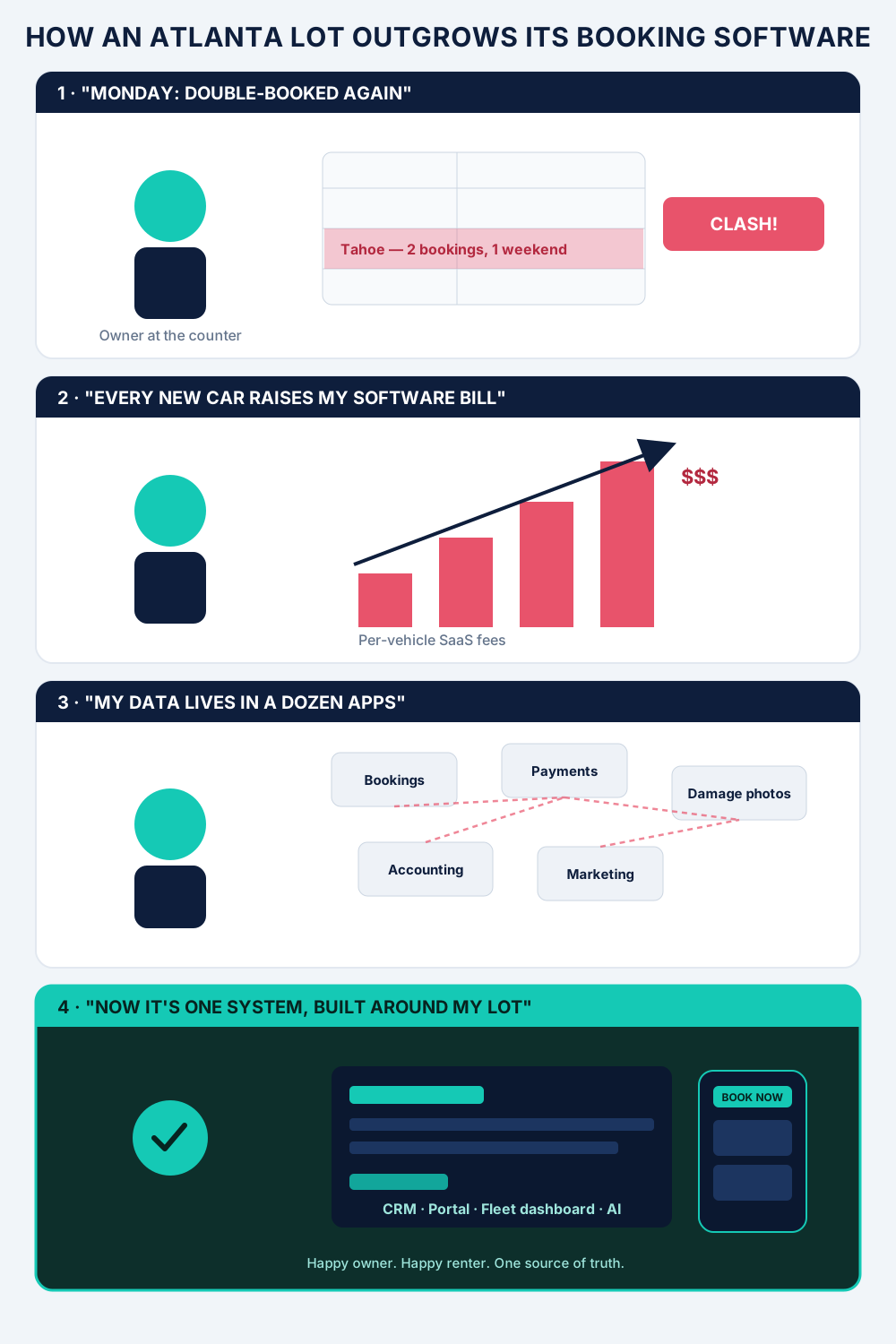
The most common “booking system” for an independent lot is still a spreadsheet plus a calendar plus a text thread. It works right up until two people book the same vehicle for the same weekend, and now you’re comping an upgrade or losing a customer at the counter. Manual, disconnected tracking is exactly where booking errors breed — and a double-booking in a busy Atlanta weekend isn’t a rounding error, it’s a lost rental plus a bad review.
2. Per-vehicle SaaS fees that punish growth
Most off-the-shelf rental platforms charge per vehicle, per seat, or per booking. That means every car you add to the lot raises your software bill before it earns a dollar — your tooling cost scales up with your fleet instead of down. Growth should lower your cost per rental, not raise it.
3. No CRM built for how a rental lot actually works
Generic booking software treats a reservation as a transaction and forgets the customer. There’s no pipeline for the corporate account you’re courting, no tag for the renter who always takes the weekend SUV, no automatic follow-up when a deposit screen gets abandoned. The corporate-account revenue you’re leaving on the table needs a real CRM, not a booking log.
4. Renters have nowhere to book or self-serve
If your customers can’t book, e-sign the rental agreement, extend a rental, and pay from their phone, your staff becomes the booking portal — every change is an email-and-text negotiation. A branded self-service portal is now table stakes; without one you’re absorbing the labor your software should be doing, and losing the after-hours booking to the lot that offers instant online reservations. That’s the same conversion leak covered in the car rental website conversion guide.
5. Your data is scattered across a dozen apps
Bookings in one tool, payments in Stripe, damage photos in your phone’s camera roll, marketing in another platform, accounting in QuickBooks. The average company now runs 106 SaaS apps, and about 53% of paid SaaS licenses go unused (Statista / BetterCloud; BetterCloud). Every disconnected app is a manual copy-paste and a place for the truth to drift.
6. No AI that knows your fleet
Off-the-shelf tools bolt on a generic chatbot that can’t check your real availability, quote your real rates, or book onto your real calendar. Meanwhile 80%+ of small businesses using AI report productivity gains (JPMorganChase Institute) — but only when the AI is wired into their actual data. A booking bot that doesn’t know your fleet is theater.
The hidden tax of scattered systems
The per-vehicle fee is the cost you can see. The expensive one is invisible: the hours your team burns moving data between tools that don’t talk. Workers toggle between applications roughly 1,200 times a day and lose about 4 hours a week just reorienting after each switch (Harvard Business Review). Studies of context-switching put the refocus cost even higher — around 9.5 minutes to get back into a productive rhythm after jumping tools (Qatalog / Cornell, via Conclude).
Put that in a lot’s terms. Every time your counter person copies a reservation from the booking app into a spreadsheet, checks the payment in Stripe, texts the customer a pickup time, and logs a damage photo somewhere else, that’s four tools and four chances to drop something. Multiply it by every rental on a busy Atlanta weekend and the “cheap” software stack is quietly the most expensive thing on the lot — not in license fees, but in the bookings and hours it bleeds.
I’ve watched operators pay for six tools and a part-timer whose whole job is retyping data between them. That salary is the real price of off-the-shelf. Custom software doesn’t just replace the apps — it deletes the copy-paste job that was holding them together.
The renter feels it too. When your systems don’t share a single source of truth, the confirmation says one thing, the counter says another, and the customer trusts you a little less. In a market where they can rebook with a competitor in ninety seconds, a system that contradicts itself is a system that loses the repeat rental.
Build vs. buy: when custom software actually pays off
Off-the-shelf isn’t wrong for everyone. If you run three cars and rent casually, a simple booking app is fine. The math flips when your operation gets specific and your fleet gets bigger — when the workarounds, spreadsheets, and per-vehicle fees start costing more than the software would. That’s the build-vs-buy crossover, and analysts consistently find custom systems return more over a multi-year horizon because they eliminate recurring per-seat costs and the manual labor around them.
The old objection to building was speed and cost — custom used to mean a six-figure quote and a year of waiting. That’s what changed. AI-assisted development means a small team can ship the same software roughly 10× faster and at about half the cost of a traditional dev shop, which drops the crossover point low enough that a mid-size lot can justify a custom reservation system it fully owns. You stop renting your operating system and start owning it.
What custom software for an Atlanta rental lot looks like
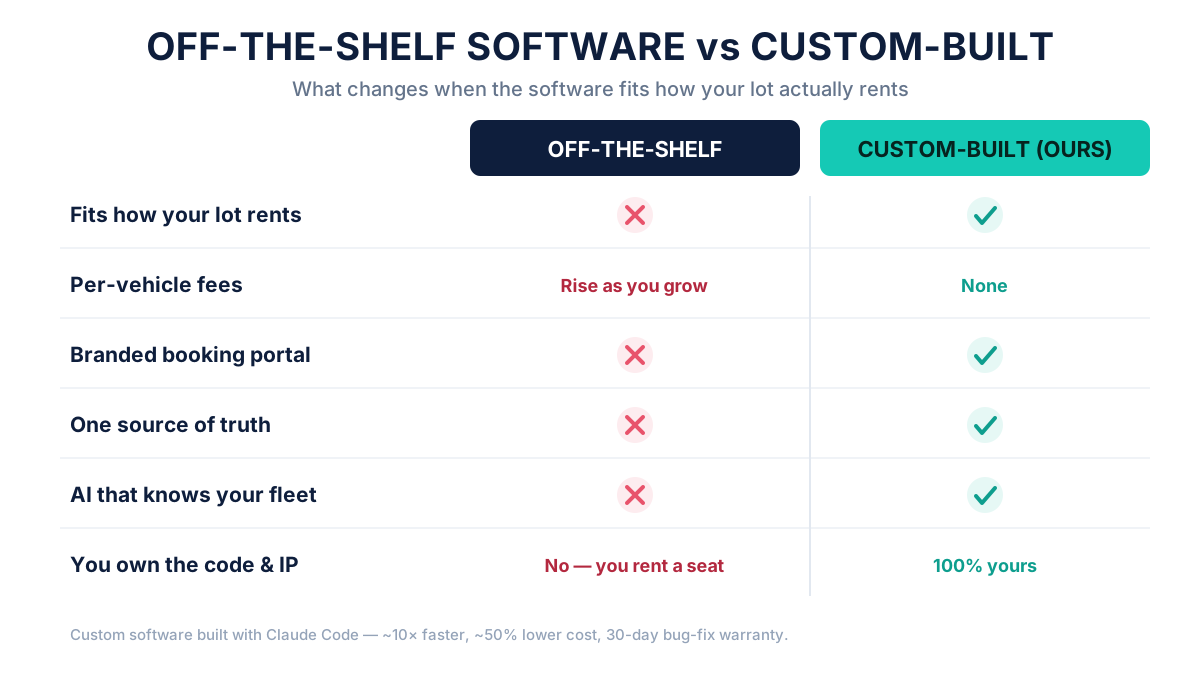
“Custom software” sounds abstract until you see what it replaces. For a car rental operation, it’s usually four connected pieces, built to fit your lot instead of forcing your lot to fit a template:
- A reservation CRM for your fleet. One system that holds every vehicle, reservation, customer, deposit hold, and corporate account — with pipelines and tags built around how you actually rent, not a generic booking log.
- A branded customer booking portal. Renters book a vehicle, e-sign the rental agreement, upload their license, extend or modify a reservation, and pay — from their phone, 24/7 — with everything flowing straight into your CRM. No email-and-text chaos.
- A fleet dashboard. Real-time utilization, which cars are earning and which are idle, upcoming returns, and revenue per vehicle — the numbers you need to make re-rent and pricing calls, in one screen instead of five.
- A custom AI agent that knows your fleet. A booking-intake and voice agent trained on your real availability, rates, and policies, that quotes and books onto your actual calendar and hands off to a human when it should — the AI layer we detail in the car rental AI automation guide and the 24/7 booking-chatbot breakdown.
The point isn’t more software — it’s one system that replaces the dozen apps and the copy-paste job holding them together, and integrates with the marketing and reservation tools you already run (including GoHighLevel, Stripe, and QuickBooks).
“Isn’t custom software slow and expensive?” — not anymore
This is the objection every operator raises, and it’s built on how custom software used to work. Here’s the current reality, which is why the build-vs-buy math changed:
- Speed. Because the build is AI-assisted (we direct AI coding agents with Claude Code rather than hand-typing every line), typical timelines run 2–3 weeks for a booking or intake agent, 3–5 weeks for a customer booking portal, and 6–12 weeks for a full reservation CRM — often half what a traditional shop quotes.
- Cost. Roughly 50% lower on average than a conventional dev shop for comparable software, with no per-vehicle SaaS fee compounding every time you add a car.
- Ownership. You own 100% of the code and IP, deployed to your own infrastructure and accounts — not a seat you rent forever.
- Support. A 30-day bug-fix warranty is included, with the option to keep a dedicated GoHighLevel/engineer VA from $700/month for ongoing changes, or an hourly retainer after that.
How to know you’re ready to replace your booking software
You don’t need to be big to outgrow off-the-shelf — you need to be losing time or bookings to it. A quick self-check:
- Have you double-booked a vehicle because your calendar and your spreadsheet disagreed?
- Does your software bill rise every time you add a car, regardless of whether that car is earning?
- Do customers have to call or text you to book, change, or pay instead of doing it themselves online?
- Is your data spread across four or more apps that you manually reconcile?
- Would a single screen showing utilization and revenue per vehicle change a decision you’re making by gut today?
Answer yes to two or more and you’ve hit the crossover. At that point, another generic plan just raises the rent on a system that doesn’t fit — and the real fix is software shaped around your lot. If you’d rather start from a pre-built base for the marketing-and-follow-up side, our Car Rental Snapshot installs the booking-recovery, reminder, and review workflows in about 24 hours, and the custom build handles the reservation-system core. For deeper GoHighLevel integrations and migrations, that’s exactly what our GHL development service exists to do.
The bottom line for Atlanta operators
Atlanta’s rental demand has never been higher — 108 million airport passengers and a record Georgia travel year — and that’s precisely why the constraint has moved from getting bookings to managing them without leaks. Off-the-shelf booking software gets a lot to its first dozen cars and then starts charging more to do less: per-vehicle fees, scattered data, no real CRM, no portal, no AI that knows your fleet.
Custom software used to be the slow, expensive alternative. It isn’t anymore. Built AI-first, a reservation CRM, booking portal, fleet dashboard, and AI agent — shaped around your lot and owned outright — now ship in weeks at roughly half the cost of the old way. In a market this busy, the operators who win aren’t the ones paying the most in software fees. They’re the ones whose software finally fits how they rent. Get a custom software quote or book a discovery call and scope the piece that pays back first.
Frequently asked questions
When should a car rental company switch from off-the-shelf software to custom?
The crossover usually hits when your operation gets specific and your fleet grows past a dozen or so vehicles — when spreadsheets start double-booking cars, per-vehicle SaaS fees climb faster than revenue, your data lives in four or more disconnected apps, and off-the-shelf tools can't model your real policies (deposit holds, corporate rates, return checklists). If you answer yes to two or more of those, the workarounds are already costing more than a custom system would, and building typically returns more over a multi-year horizon.
How much does custom car rental software cost, and how long does it take?
Because the build is AI-assisted with Claude Code, timelines run about 2–3 weeks for a booking or intake agent, 3–5 weeks for a customer booking portal, and 6–12 weeks for a full reservation CRM — often half a traditional shop's quote, at roughly 50% lower cost. You own 100% of the code and IP, deployed to your own infrastructure, with a 30-day bug-fix warranty. Exact pricing is scoped on a discovery call based on which pieces you need.
Can custom software integrate with GoHighLevel, Stripe, and QuickBooks?
Yes. The whole point of building custom is a single source of truth, so integrations are core: a reservation CRM and booking portal can push and pull data with GoHighLevel for marketing and follow-up, Stripe for payments and deposit holds, and QuickBooks for accounting — plus any existing rental platform you're migrating off of. That's what deletes the manual copy-paste job between disconnected apps.
Do I have to replace my whole booking system at once?
No. Most Atlanta operators start with the single piece bleeding the most — usually a branded booking portal so renters self-serve, or an AI booking agent so after-hours inquiries convert — prove the ROI on their own numbers, then expand into the full reservation CRM. Starting small lowers risk and gets a win on the board in weeks.
Why not just use Turo or a big off-the-shelf platform?
Marketplaces like Turo and generic platforms take a cut, own the customer relationship, and force your lot into their model — you can't shape the deposit policy, the corporate-account flow, or the AI to your operation, and you don't own the data or the code. Custom software flips that: your fleet, your renters, your rules, your IP. If you're weighing the marketplace question specifically, see our breakdown of running your own booking system versus Turo.
About the author: Julian Cardoza is an Independent Fleet Operations Advisor based in Phoenix, Arizona. He spent eleven years running the counter and the back lot at independent rental locations across the Southwest before going solo, and learned the hard way that a full lot on paper still loses money when the software can’t keep up. Today he helps small and mid-size rental companies replace scattered tools with systems built around how they actually rent.
Related reading:
- Fleet Utilization Rate: The Number That Decides If Your Lot Makes Money
- AI for Car Rental Businesses: The 2026 Automation Playbook
- AI Chatbots for Car Rental Businesses: Turn 24/7 Chat Into Booked Rentals
- Car Rental Website Conversion: Turn More Visitors Into Booked Rentals
- Winning and Keeping Corporate Rental Accounts
Editorial note: figures cited are drawn from the third-party research linked inline and reflect the sources as of publication. The 5-year ROI comparison is a reported, illustrative figure attributed to Gartner via a third-party analysis and should be treated as directional, not a guarantee. Market-size projections are analyst estimates that vary by methodology. GHL Car Rental Snapshot builds GoHighLevel automation systems and custom software, and provides trained VAs — it is not a car rental company, insurer, or payment processor. Software costs, market data, and platform features change; confirm current sources before making decisions.