

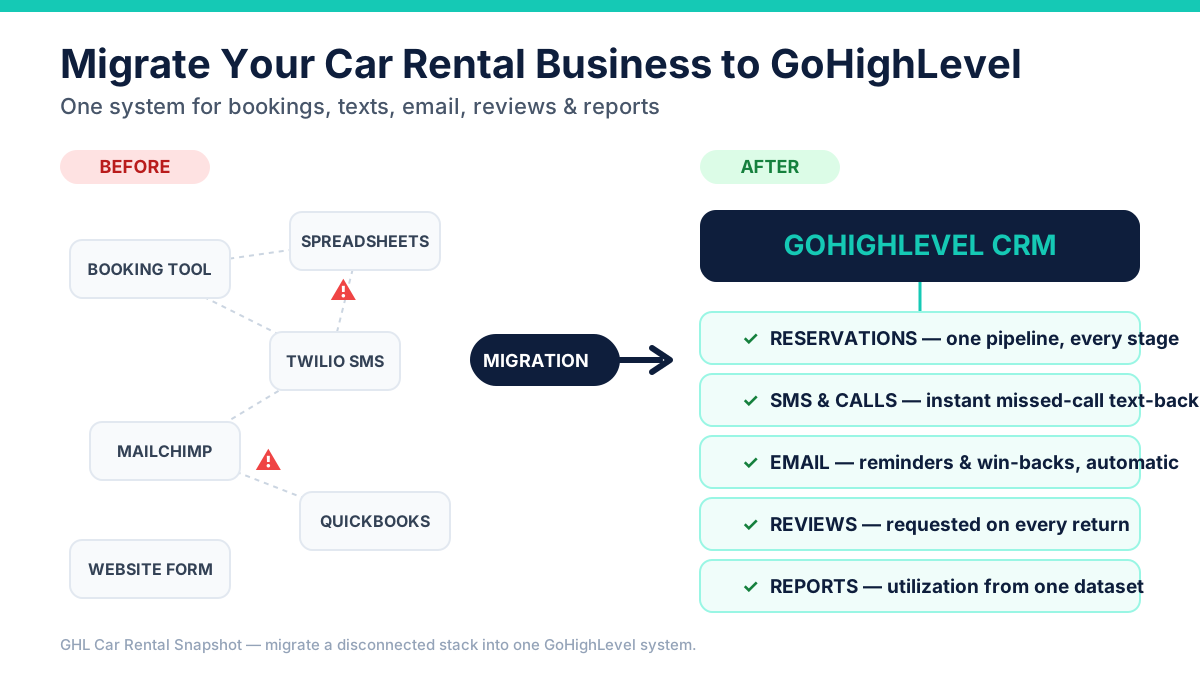
A Charlotte rental operator opens a Friday morning and touches five different tools before 9 a.m.: the booking app to check today’s pickups, a spreadsheet to see which cars are actually back, Twilio to text a late renter, Mailchimp to send a “come back” email, and QuickBooks to reconcile a deposit. None of them talk to each other. The fastest, safest way to fix that is to migrate your car rental business onto GoHighLevel — one system where the booking, the text, the email, the review request, and the report all live on the same contact record — done in five steps: audit and map your stack, export and clean your data, rebuild your rental workflow in GHL, import and verify with a parallel run, then cut over with a stabilization window. This guide walks a Charlotte lot (or the agency serving one) through exactly that, and shows where a done-for-you migration is worth it.
The stakes aren’t abstract. A disconnected stack quietly costs you two things every rental business lives on: time (hours lost re-keying data between apps) and bookings (leads that go cold in the gap between tools). Below is the data, the Charlotte context, and the migration playbook.
Key Takeaways
- Charlotte Douglas International Airport (CLT) handled a record 58.8 million passengers in 2024 — up 10% over 2023 — ranking it the 7th-busiest airport in North America (Charlotte Douglas International Airport). Every arrival is a ground-transportation decision, and a lot that answers fast wins it.
- Workers toggle between applications roughly 1,200 times a day and lose just under 4 hours a week — about 9% of their time at work — reorienting after each switch (Harvard Business Review, 2022). A rental team hopping between a booking app, texts, email, and a spreadsheet is paying that tax all day.
- The average company wastes about $18 million a year on unused SaaS licenses and actively uses only 49% of the software it pays for (Zylo, 2024 SaaS Management Index). Tool sprawl is expensive even before you count the lost bookings.
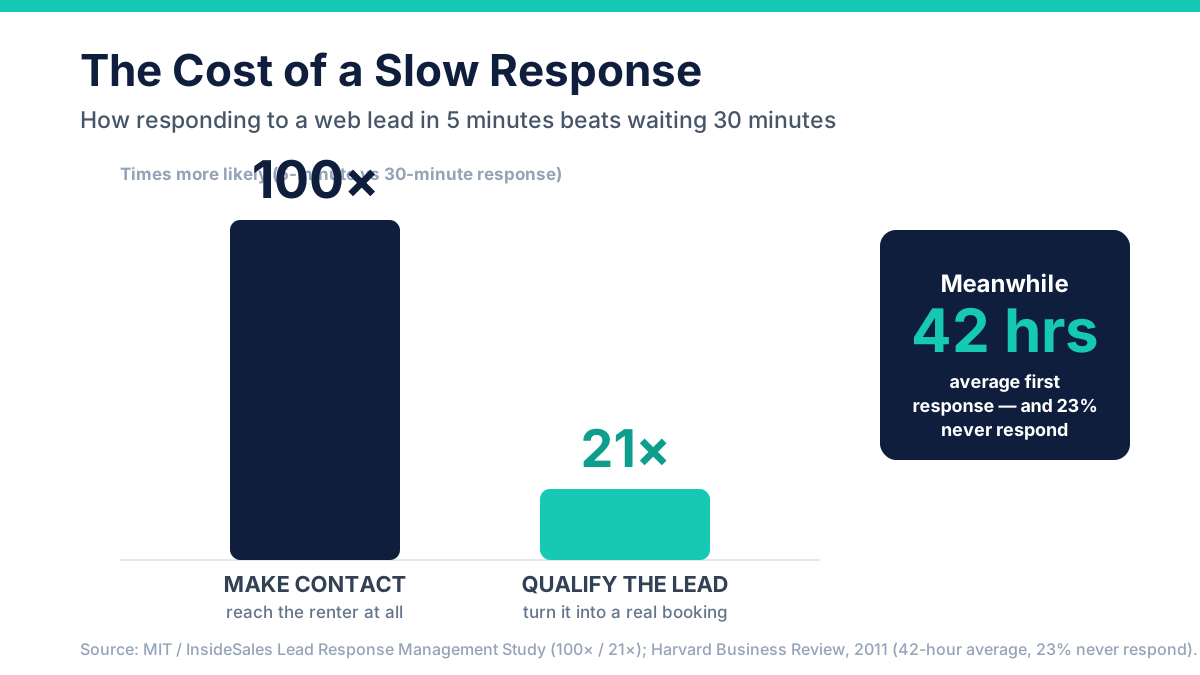
- Responding to a web lead within 5 minutes instead of 30 makes you ~100× more likely to make contact and ~21× more likely to qualify it (MIT / InsideSales Lead Response Management Study) — yet the average business takes 42 hours to respond and 23% never do (Harvard Business Review, 2011). One system that auto-responds instantly is the point of migrating.
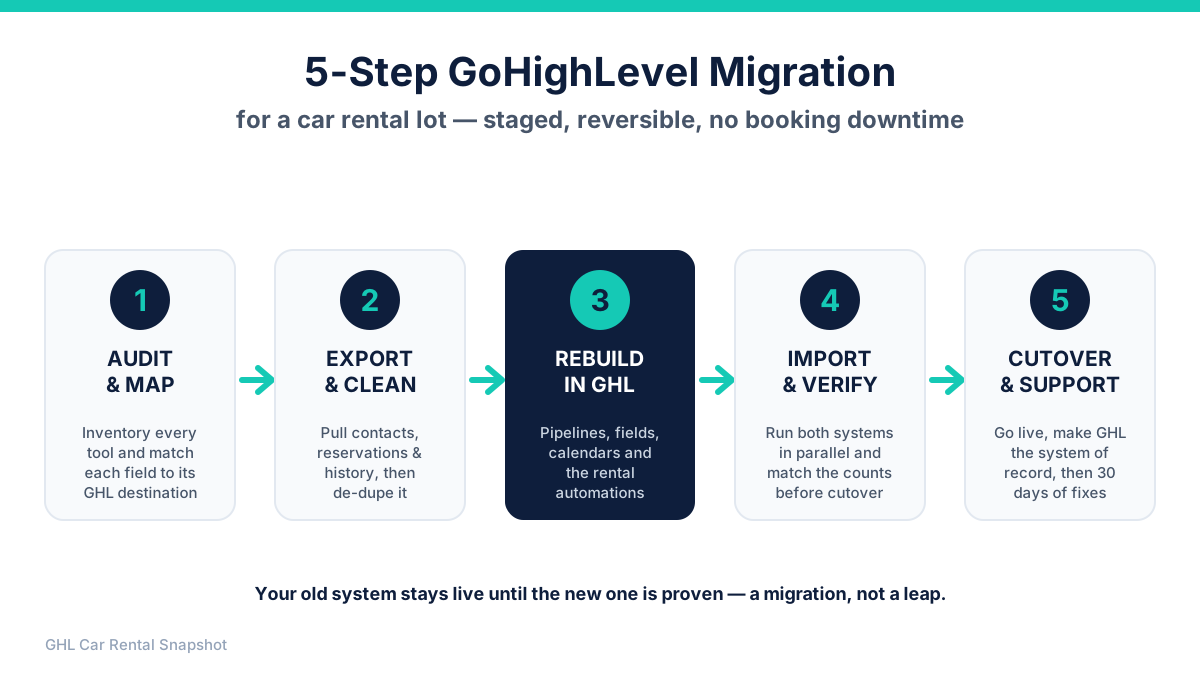
- Migration is a 5-step, reversible process — audit & map, export & clean, rebuild, import & verify (parallel run), cut over — and it does not require pausing your lot.
Table of contents
- Why Charlotte car rental operators outgrow a patchwork stack
- The hidden cost of a disconnected stack
- What “one system” actually means for a rental lot
- The 5-step GoHighLevel migration playbook
- Connecting the tools you keep: integrations
- Migration mistakes that cost Charlotte lots money
- DIY or done-for-you?
- The bottom line for Charlotte operators
- Frequently asked questions
Why Charlotte car rental operators outgrow a patchwork stack
Charlotte is one of the strongest independent rental markets in the Southeast right now, and the demand curve keeps bending up. CLT moved a record 58.8 million passengers in 2024 — a 10% jump over the prior record of 53.4 million in 2023 — making it the 7th-busiest airport in North America and American Airlines’ second-largest hub (Charlotte Douglas International Airport). Off the runway, the visitor economy is just as hot: domestic and international visitors spent $6.4 billion in Mecklenburg County in 2024, up 8.9% over 2023 (Charlotte Regional Visitors Authority). Nationally, analysts put the U.S. car-rental market near $39 billion in 2025 (Mordor Intelligence).
Here’s the problem that record demand exposes: most independent lots grew their software the way they grew their fleet — one tool at a time, whenever a pain got loud enough. A reservation app here, a Twilio number there, Mailchimp for the newsletter, a spreadsheet for the return checklist, QuickBooks for the books, and a website form that emails whoever happens to check the inbox. Each tool solved one problem. Together they created a bigger one: your renter’s information is scattered across five systems that don’t share it, so nothing follows up automatically and someone has to be the human glue.
That’s fine at ten cars. At a busy Charlotte lot chasing airport and weekend turnaround, the glue cracks — and it cracks on exactly the days you can least afford it. This is the same operational reality that pushes lots to outgrow off-the-shelf booking software; the difference is that migration to a single CRM fixes the whole stack, not just the booking box.
The hidden cost of a disconnected stack
A patchwork stack has two invisible line items that never show up on an invoice.
1. Time lost re-keying and toggling. Every tool that doesn’t sync is a tool someone has to update by hand. Workers toggle between applications about 1,200 times a day and lose just under four hours a week — roughly 9% of their working time — just reorienting after each switch (Harvard Business Review, 2022). On a rental lot that means copying a booking into the spreadsheet, pasting a phone number into Twilio, adding the renter to Mailchimp, and typing the deposit into QuickBooks — the same renter, entered four times. That’s the tax the GoHighLevel VA model is designed to eliminate, and consolidating the tools removes most of it at the source.
2. Money lost to sprawl and silos. Redundant software is expensive on its own — the average company wastes about $18 million a year on unused SaaS licenses and actively uses only 49% of what it pays for (Zylo, 2024 SaaS Management Index). Independent lots aren’t spending millions, but the pattern holds: three overlapping tools you half-use, each with its own bill. Worse is what the disconnection hides — data leaders estimate 19% of their company’s data sits siloed and inaccessible, and more than 8 in 10 say those silos reduce visibility and cost them revenue (Salesforce, State of Data & Analytics). When your booking history, your texts, and your reviews live in separate boxes, you can’t see the renter — so you can’t follow up, upsell, or win them back.
The most expensive silo of all is the gap between an inquiry and your response. Responding to a web lead within 5 minutes instead of 30 makes you about 100× more likely to make contact and 21× more likely to qualify it (MIT / InsideSales Lead Response Management Study). Yet the average business takes 42 hours to respond to an inbound lead, and 23% never respond at all (Harvard Business Review, 2011). When a Charlotte traveler’s website form lands in an inbox nobody’s watching, the booking is already drifting to the lot that texted back in ten seconds.
What “one system” actually means for a rental lot
Migrating to GoHighLevel doesn’t mean buying a fancier version of one tool. It means every function that touches a renter runs off the same contact record, so the handoffs happen automatically:
- Reservations live as pipeline stages — inquiry → quoted → booked → picked up → returned — so you can see the whole lot at a glance instead of cross-checking a spreadsheet. This is the backbone of reservation automation.
- Texts and calls go out from the CRM, tied to the booking, with two-way replies logged on the record. A missed call fires an instant text-back without anyone lifting a finger.
- Email — welcome flows, pickup reminders, win-backs — runs off the same list, so no one gets manually added to Mailchimp again.
- Reviews request themselves the moment a return is marked complete, feeding your Google profile instead of your good intentions.
- Reports pull from one dataset, so utilization, revenue per vehicle class, and booking source are finally answerable questions — the metrics behind fleet utilization.
The renter’s information stops being scattered and starts being cumulative. Every booking, text, and review adds to a single history — which is exactly the visibility the 19%-siloed-data problem destroys. That consolidation is what makes the AI receptionist and 24/7 booking automations actually work: they can only book a renter they can see.
The 5-step GoHighLevel migration playbook
Migration sounds scary because operators picture a “big switch” day where bookings vanish and the phones go dark. Done properly, it’s the opposite: a staged, reversible process where your old system keeps running until the new one is proven. Here’s the exact sequence.
Step 1 — Audit and map your current stack
Before you move anything, inventory it. List every tool that touches a renter, and for each one write down what data it holds and where that data needs to land in GoHighLevel. A rental lot’s map usually looks like this:
- Booking app → contacts + opportunities (pipeline stages)
- Spreadsheet of reservations → custom fields (pickup date, return date, vehicle class, deposit status)
- Twilio history → conversation/SMS records
- Mailchimp list → contacts + email tags/segments
- QuickBooks → invoices/payments (kept in QuickBooks, synced in)
- Website form → inbound automation trigger
The output of Step 1 is a field-mapping document: every source field matched to its GHL destination. Skip this and you’ll discover halfway through that “deposit taken” lived in three different tools with three different meanings.
Step 2 — Export and clean your data
Export contacts, reservations, deal history, and email lists from each source as CSVs. Then — before anything touches GHL — clean it: de-duplicate renters who exist in both the booking app and Mailchimp, standardize phone formats, drop dead records, and normalize vehicle-class names so “SUV,” “Suv,” and “sport utility” become one value. Garbage that goes into a fresh CRM is garbage forever. This is the least glamorous step and the one that most determines whether the migration feels clean or cursed.
Step 3 — Rebuild your rental workflow in GoHighLevel
Now build the destination. Recreate your pipeline stages, custom fields, calendars (pickup/return scheduling), and the core automations — missed-call text-back, booking confirmations, pickup/return reminders, no-show recovery, and the post-return review request — so the system matches how your lot actually runs, not a generic template. This is where a rental-specific build beats a blank GoHighLevel account: the workflows a lot needs (deposit holds, damage-photo prompts, corporate-account pipelines) are known, and the Car Rental Snapshot ships them pre-built so you’re configuring, not inventing.
Step 4 — Import and verify with a parallel run
Import the cleaned data, then run both systems in parallel for a short window. Push new bookings into GHL while the old system still records them, and reconcile: do the contact counts match? Did every reservation land in the right stage? Are the deposit fields populated? This parallel run is your safety net — you confirm the new system is correct against a source of truth that’s still live, so a mismatch is a fix, not a fire.
Step 5 — Cut over and stabilize
Once the counts line up and the automations fire correctly, cut over: GHL becomes the system of record, inbound forms and phone numbers point to it, and the old tools go read-only. Then hold a 30-day stabilization window where you watch for edge cases — the odd import quirk, a workflow that needs tuning — and fix them fast. A full-service GHL migration includes this window precisely because the first month is when real renter behavior surfaces the last 5% of issues.
Operators think the risky part of a migration is the data. It isn’t — a clean export and a parallel run make the data boring. The risky part is rebuilding the workflows badly, so you migrate a mess into a nicer box. Map how the lot actually runs first, then move.
Connecting the tools you keep: integrations
Migration doesn’t always mean ripping everything out. Some lots keep a specialized rental-management platform for fleet logistics and use GoHighLevel as the sales, communication, and reputation layer on top. That works — as long as the two systems actually talk. GoHighLevel connects to the tools a rental business already runs, either natively or through custom integration work:
- Rental platforms — HQ Rental Software, RENTALL (Navotar), TSD — so reservations flow into GHL pipelines.
- QuickBooks — invoices, deposits, and AR reconciled against the CRM.
- Stripe — deposit holds and payment webhooks tied to the booking.
- Calendly / Cal.com — pickup and return scheduling synced to the contact.
- Telematics / GPS — vehicle location and mileage events where the fleet uses them.
Where a connection doesn’t exist off the shelf, it can be built — a two-way sync via webhooks or scheduled jobs — so custom GHL development turns “these tools don’t integrate” into “these tools are one system.” If your operation has genuinely unique logistics, that may point toward custom software rather than forcing everything into GHL; the migration audit in Step 1 is where you decide which tools to consolidate and which to connect.
Migration mistakes that cost Charlotte lots money
The migrations that go sideways almost always repeat the same avoidable errors:
- Skipping the clean. Importing a messy, duplicated list means your fresh CRM is born confused — the same renter texted twice, follow-ups firing to dead numbers.
- Big-bang cutover with no parallel run. Flipping the switch without reconciling against the old system is how bookings quietly disappear on day one. The parallel run in Step 4 exists to make that impossible.
- Migrating tools, not workflows. Recreating your spreadsheet inside GHL just gives you a spreadsheet with a login. The win is automation — the handoffs that used to need a human now run themselves.
- No owner for the 30-day window. The last 5% of issues surface only when real renters hit the system. Without someone accountable for that month, small quirks calcify into “the new system is broken.”
- Losing history. Your booking and communication history is an asset — repeat-renter patterns, corporate accounts, review timing. Don’t leave it behind in a tool you’re about to cancel.
DIY or done-for-you?
A technically confident operator can run this migration solo — GoHighLevel is learnable, and the five steps are the same whether you or a team execute them. The honest trade-off is time and risk. A DIY migration for a real rental lot typically runs a few weeks of evenings: learning the platform, mapping fields, cleaning data, rebuilding automations, and debugging the parallel run — all while running the business. The failure mode isn’t usually the data; it’s a workflow rebuilt wrong under time pressure, or a cutover rushed to “just be done.”
A done-for-you migration trades money for time and de-risking: the mapping, cleaning, rebuild, parallel-run verification, and the 30-day stabilization are handled by people who’ve done it for rental operations before, so the lot switches over on a known-good system. If your evenings are worth more than the fee — or a botched cutover would genuinely hurt bookings — that math favors done-for-you. Either way, the destination is the same: one system, no handoff leaks. (Not ready to run the whole migration yourself day to day? A dedicated GoHighLevel VA can operate the migrated system so you don’t trade one time-sink for another.)
The bottom line for Charlotte operators
Charlotte’s rental demand has never been higher — 58.8 million airport passengers and a $6.4 billion visitor economy — and that’s exactly why a leaky, disconnected stack is so expensive now. Every hour lost re-keying data between four tools, and every inbound inquiry that cools in the gap between them, is a booking handed to a faster competitor in a market that’s handing out plenty.
Migrating to GoHighLevel isn’t a tech upgrade for its own sake; it’s how you stop paying the toggling tax and the slow-response tax at the same time. Do it in five steps — audit and map, export and clean, rebuild, verify in parallel, cut over and stabilize — and you go from five tools that don’t talk to one system that runs the lot. When you’re ready, our team can build and run the migration for you, or book a 15-minute call to get a migration plan mapped to your exact stack.
Frequently asked questions
Will migrating my car rental business to GoHighLevel interrupt bookings?
No, not if it's done in stages. A proper migration keeps your existing booking system live while you import and verify data in GoHighLevel, then runs both systems in parallel so you can reconcile bookings against a source of truth that's still working. Only after the counts and automations check out do you cut over and make GHL the system of record. The 'big switch' where bookings vanish is a symptom of skipping the parallel-run step, not of migration itself.
How long does a GoHighLevel migration take for an independent rental lot?
It depends on how many tools you're consolidating and how clean your data is, but the sequence is the same: audit and map, export and clean, rebuild workflows, import and verify with a parallel run, then a 30-day stabilization window after cutover. A done-for-you migration compresses the hands-on work because the rental-specific pipelines and automations are already built; a DIY migration typically takes a few weeks of evening work on top of running the business. The clean-data step is what most affects the timeline.
Do I have to give up my current rental-management software?
Not necessarily. Some lots keep a specialized fleet or rental-management platform (like HQ Rental Software, RENTALL, or TSD) for logistics and use GoHighLevel as the sales, communication, and reputation layer on top, connected by a two-way integration. The migration audit in Step 1 is where you decide which tools to fully consolidate into GHL and which to keep and connect. Where an integration doesn't exist off the shelf, it can be built with custom GHL development.
What data can I actually move into GoHighLevel?
Contacts, reservation and deal history, custom fields (pickup/return dates, vehicle class, deposit status), email lists and segments, and SMS/conversation records can all be migrated. Payments and invoices usually stay in QuickBooks or Stripe and sync into GHL rather than moving wholesale. The key is exporting each source to a clean CSV and de-duplicating before import, so a renter who exists in both your booking app and your email tool becomes one record instead of two.
Is it worth paying for a done-for-you migration instead of doing it myself?
It comes down to the value of your time versus the fee, and how much a botched cutover would cost you. GoHighLevel is learnable and the five steps are the same either way, but a DIY migration means learning the platform, mapping fields, cleaning data, and rebuilding automations while running your lot — and the common failure is a workflow rebuilt wrong under time pressure. A done-for-you migration handles the mapping, cleaning, parallel-run verification, and the 30-day stabilization so you switch onto a known-good system. If a leaked booking or a lost week would hurt, done-for-you usually pays for itself.
About the author: Priya Sandoval is a GoHighLevel agency owner and snapshot builder based in Austin, Texas. She runs a boutique agency that resells done-for-you snapshots to local service businesses, with car-rental operators as her fastest-growing segment, and is obsessed with the unglamorous plumbing — pipelines, tags, field mapping, and migration mechanics — that turns a pile of disconnected tools into one system that converts.
Related reading:
- Why Atlanta Car Rental Companies Outgrow Off-the-Shelf Booking Software
- Why Houston Car Rental Businesses Are Hiring a GoHighLevel VA
- Car Rental Fleet Utilization Rate: How to Raise It in 2026
- GoHighLevel’s Newest Features for Car Rental Operators (2026)
- Missed-Call Text-Back for Car Rental Businesses
Editorial note: figures cited are drawn from the third-party research linked inline and reflect the sources as of publication. The lead-response multipliers originate in the MIT/InsideSales Lead Response Management study (Oldroyd, 2007) and are frequently misattributed to Harvard Business Review, which separately published the 42-hour/23% response figures in 2011; both are cited directly above. SaaS-waste and data-silo figures are drawn from Zylo and Salesforce research and are directional benchmarks, not guarantees for any single business. Market-size projections are analyst estimates that vary by methodology. GHL Car Rental Snapshot builds and migrates GoHighLevel automation systems for car rental businesses — it is not a car rental company, insurer, payment processor, or the vendor of any third-party platform named here. Confirm current sources and your own numbers before making decisions.